Paint-grade vs stain-grade millwork
Two ways of building the same piece, chosen by the finish it will wear. Here is what changes and how to choose.
By Toronto Millworks, updated October 2026
What the terms mean
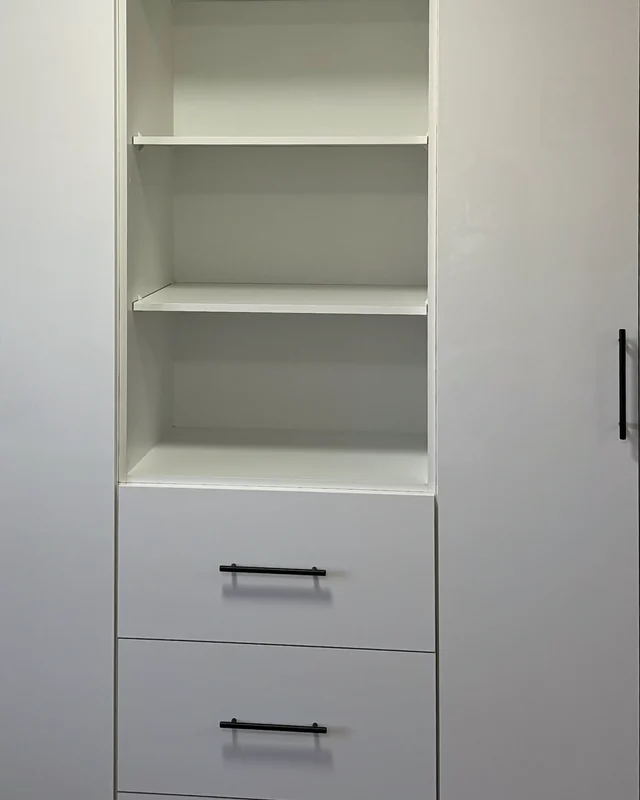
Paint-grade millwork is made from materials chosen to take paint well. Joints and small defects are filled before finishing, because paint hides the material underneath. Stain-grade millwork is made from timber selected for its grain and colour, because the finish shows the wood. There is nowhere to hide a fill, so every joint has to be tight and every board has to match its neighbour.

Paint-grade materials
- MDF: dense, flat and stable, with no grain to telegraph through paint. Ideal for panels and mouldings, though its edges must be sealed against water.
- Poplar: a soft hardwood that machines cleanly and holds a profile, used for frames and trim.
- Hard maple: very hard and fine grained, a durable choice for painted doors that will see heavy use.
Stain-grade materials
- White oak: rift sawn for straight, quiet grain or quarter sawn for its ray fleck. Takes clear finishes and stains well.
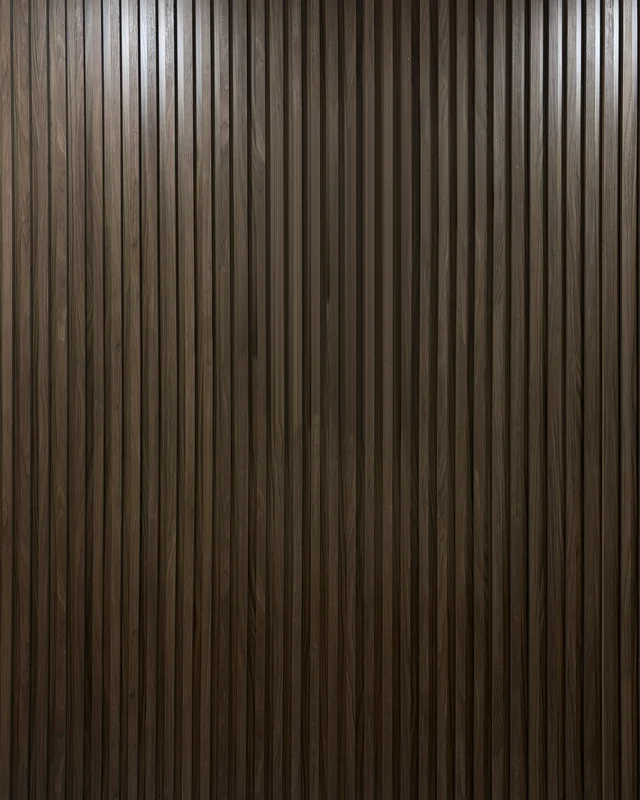
- Walnut: rich brown and naturally dark, usually finished clear.
- Cherry: fine grained and warm, and it darkens noticeably with light.
- Maple: pale and hard, but it can stain unevenly without care.
- Veneers: real timber on a stable core, used for wide flat panels where solid wood would move.
How they are built differently
Stain-grade work takes longer. Boards are selected and arranged so grain and colour flow across a run of doors, and offcuts that do not match are set aside. Joinery has to be tight because a gap cannot be filled invisibly. Paint-grade work can use stable sheet materials for panels and fill small imperfections, which makes it faster and usually less expensive.
How they age
Painted frames can show hairline lines at their joints as timber expands and contracts with the seasons. It is cosmetic and normal, and touch-ups are straightforward. Stained wood changes colour instead: cherry deepens to a red-brown, walnut can lighten in strong sun, and oak warms slightly. Scratches on stained work tend to blend into the grain, while scratches on paint show the material underneath.

Which to choose
| Piece | Usually | Why |
|---|---|---|
| Trim and casings | Paint | Long runs, many joints, and paint suits most interiors |
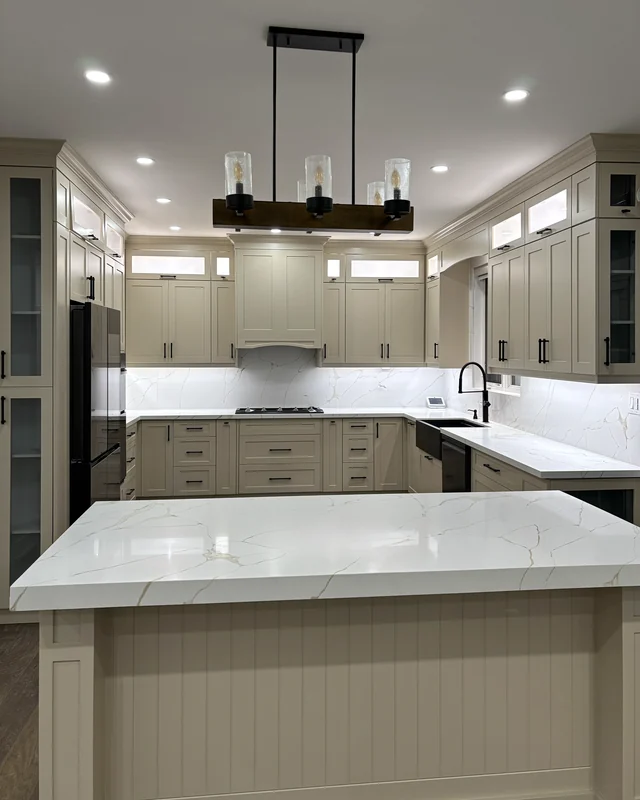
| Kitchens | Either | Paint for colour, stain for warmth, or both |
| Libraries and studies | Stain | Timber is the point of the room |
| Wall panelling | Usually paint | Stable materials across large areas |
| Bathroom vanities | Either | Seal every edge whichever you choose |
Mixing is common and often the best answer: a painted kitchen with a stained island, or painted panelling with a walnut bar.
Quick
answers
Straight answers on cost, lead time and how a job actually runs. If something is not covered here, ask and we will answer it the same way.
Every question we get askedIs paint-grade millwork lower quality?
No. It uses different materials for a different finish. Well built paint-grade work is as durable as stain-grade, and often more stable.
Can paint-grade millwork be stained later?
Not well. MDF cannot be stained, and paint-grade timber is not selected for matching grain. Decide on the finish before the work is built.
Why does painted trim crack at the corners?
Solid timber moves with humidity, and the paint film across a joint shows that movement as a fine line. It is normal and easily touched up.
Where this applies
More guides
How custom millwork is made
What happens between the first site visit and the day the joinery is finished in your room, and why the order matters.
What affects the cost of custom cabinetry
Why two kitchens of the same length can be priced very differently, and how to spend where it shows.
Choosing wood for custom cabinetry
How the common cabinet woods compare on hardness, colour and ageing, and why sheet goods and veneer deserve a fair hearing.
Tell us about the room.
Send drawings, a photo or just the dimensions. We come back with a measured quote, not a per foot guess.
What affects the costWhat are you planning?
Get a quoteNo obligation to go ahead. Measured in your room. Built in our own shop.